Case Study
Lead Generation Website and AI Intake System
A multi-page Framer website tied directly into GoHighLevel so lead capture, intake, follow-up, and pipeline handling all worked as one system.
Overview
The business did not just need a website. It needed a front-end that could attract local search traffic, capture demand clearly, and push leads into a real backend flow instead of leaving them in email or scattered tools. This build combined a Framer website, on-page conversion entry points, SEO-related code injection, GoHighLevel IVR handling, and opportunity pipeline handoff so the website acted like the front door to a real lead system.
Live Project
A Framer website that acted like a lead engine, not just a brochure.
The build combined multi-page Framer structure, conversion-first layout, site-level SEO and tracking code, website-driven IVR handling, and GoHighLevel pipeline intake so the business had one connected front-end and backend flow.
The front-end goal
The site needed to do more than look credible. It had to bring in local demand, guide the visitor toward one clear action, and create cleaner intent capture.
The system behind it
This was not just a Framer build. The website, code layer, IVR handling, and pipeline handoff were designed to work together as one lead-generation system.
The operations outcome
Instead of website inquiries living in scattered inboxes, leads moved into GoHighLevel with source visibility, intake handling, and next-step follow-up already in place.
Story Walkthrough
These screens show the public-facing website, the Framer build structure, the SEO and tracking layer, the website-driven IVR workflow, and the final lead handoff into GoHighLevel. Click any screen to zoom in.
Step 1
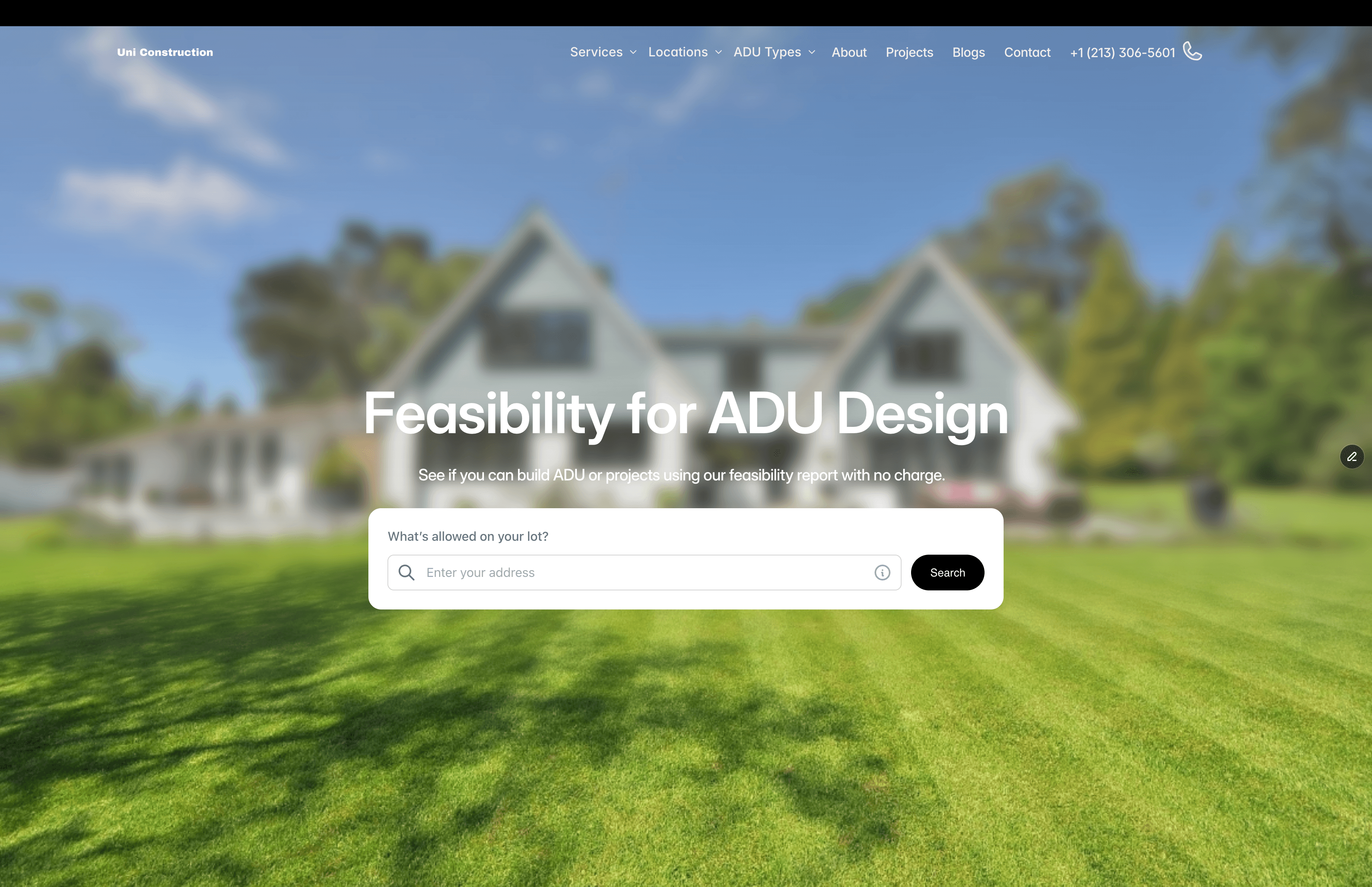
Lead Capture Hero
The homepage was built around a high-intent feasibility search instead of a generic brochure hero, giving the site a clear lead entry point.
Step 2
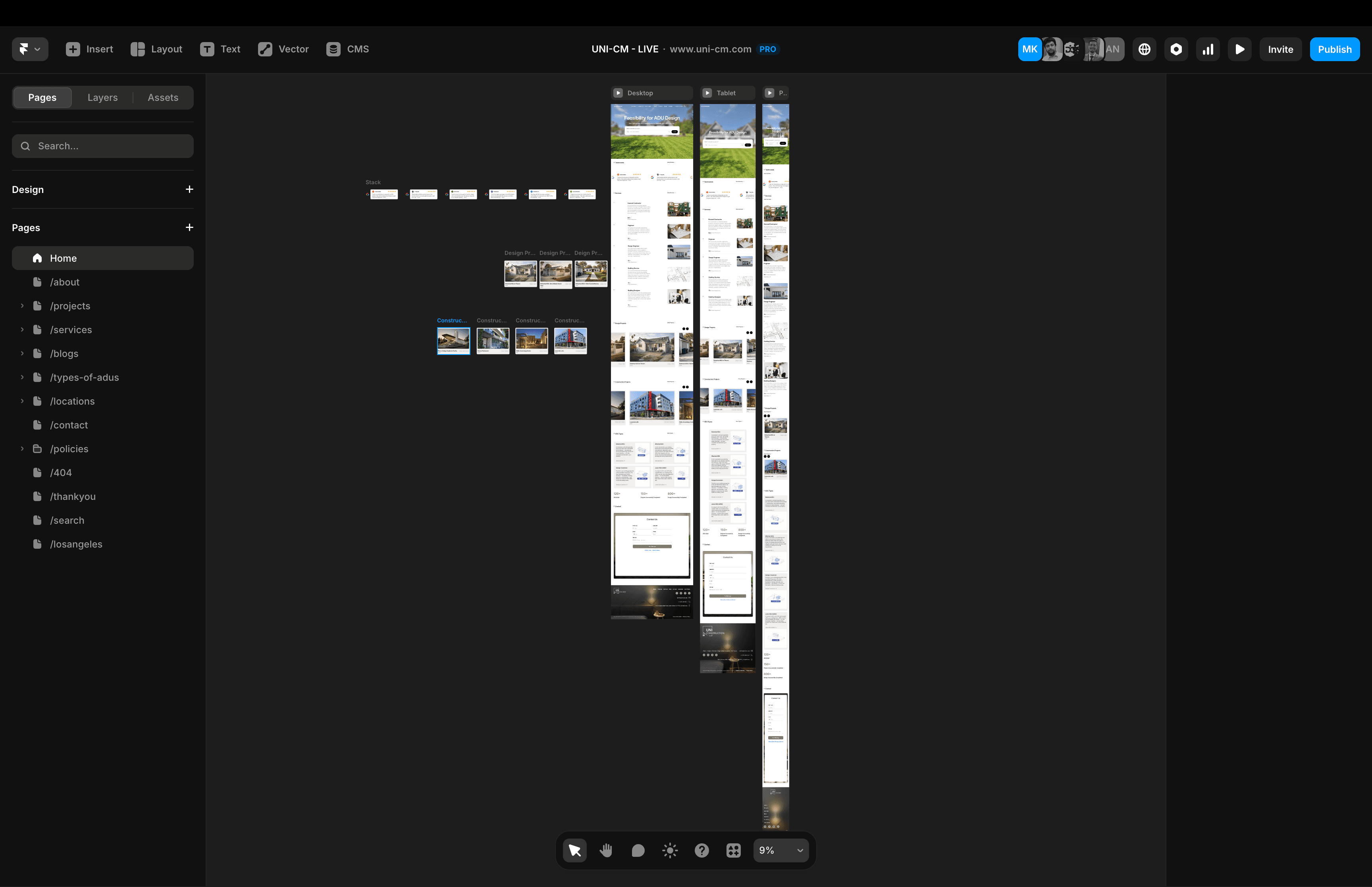
Site Architecture
The Framer build included core service, location, ADU type, blog, contact, policy, search, and thank-you pages so the site could support both discovery and conversion.
Step 3
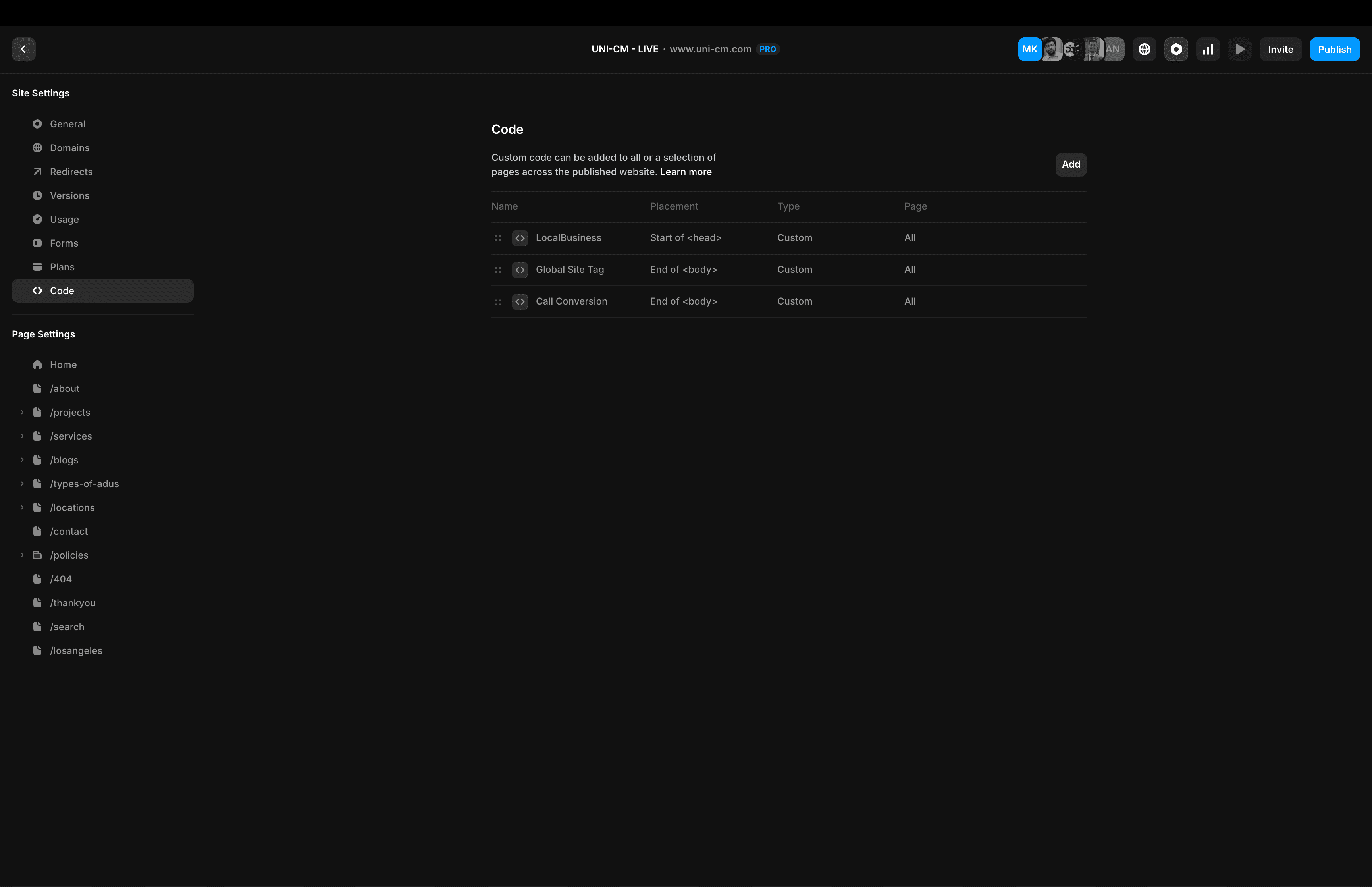
SEO and Tracking Layer
Custom code was added at the site level for LocalBusiness schema, a global site tag, and call conversion support, making the site more than a visual front-end.
Step 4
IVR Intake Workflow
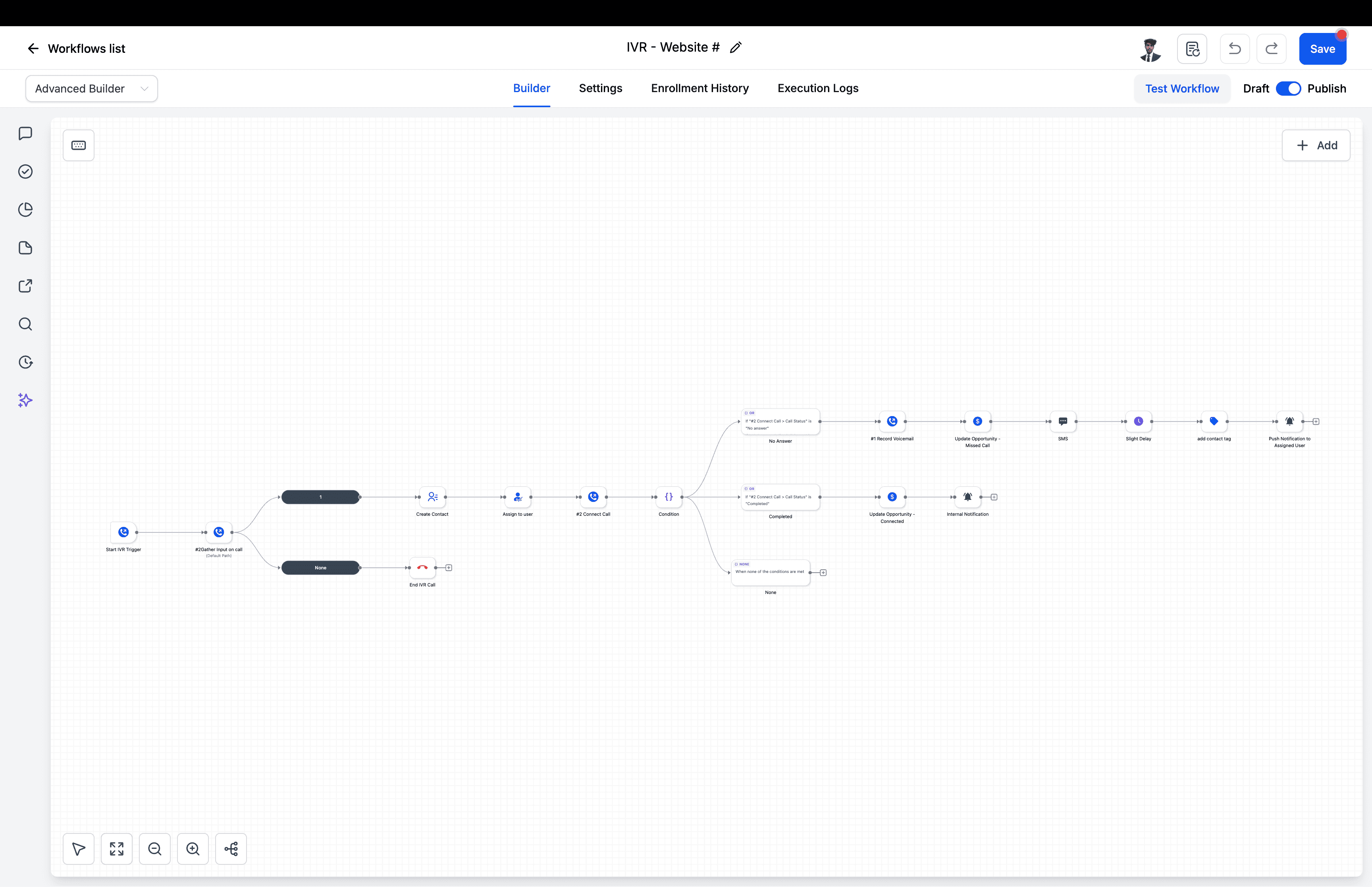
Website-driven calls moved through an IVR workflow that handled contact creation, connection attempts, voicemail branching, SMS follow-up, tagging, and internal notification.
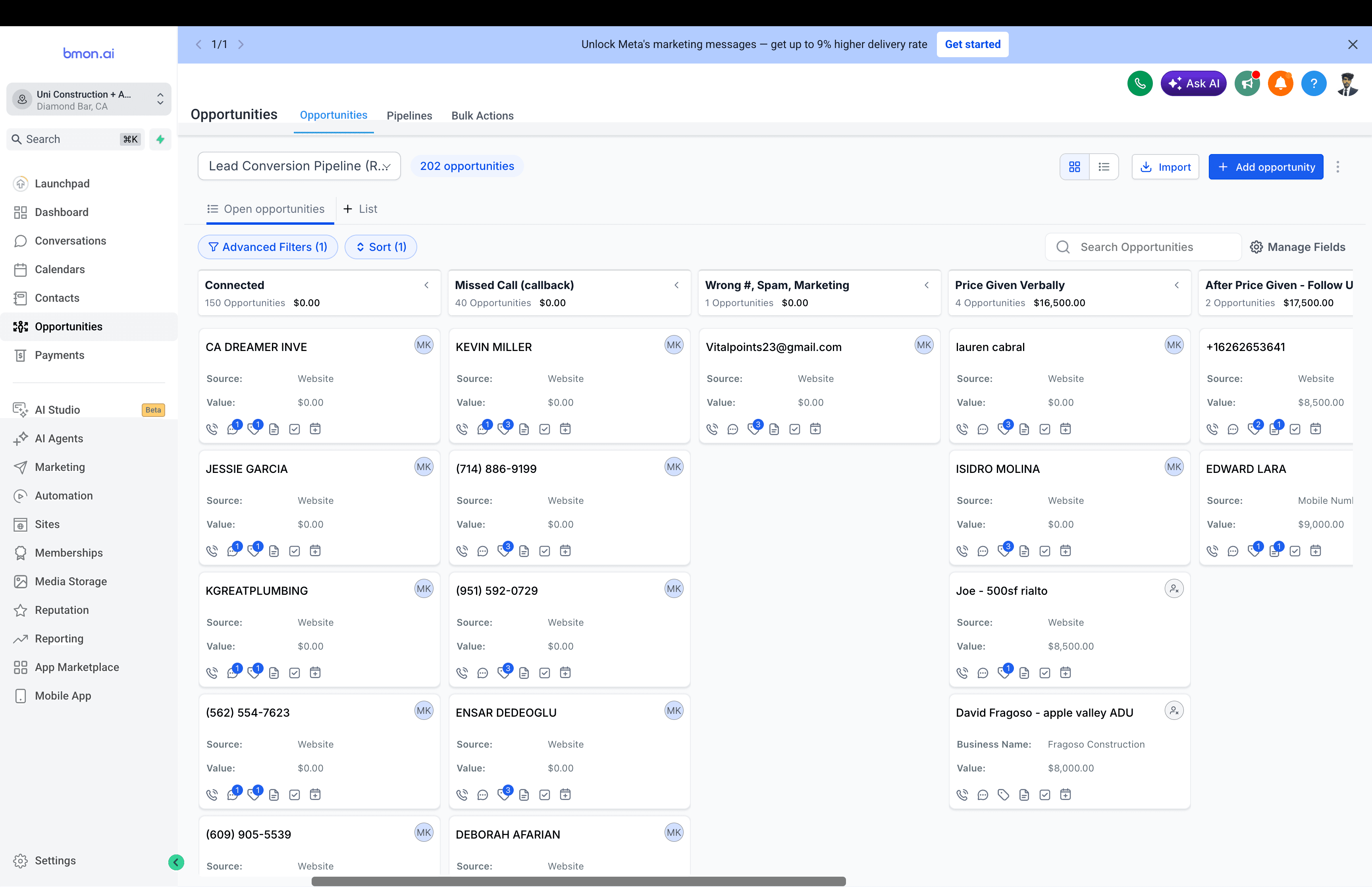
Step 5
Pipeline Handoff
Website leads landed inside the opportunity pipeline with source attribution and stage-based handling, turning visits into visible operational work instead of loose inquiries.